The first written record of Bratwurst appeared in 1313 in Nuremburg, Germany. Neighboring regions adopted and altered the recipe, and in 1432 the Germans created the Fleischverordnung, a meat purity law that governed the production of Bratwurst. Even in the U.S., Sheboygan, Wisconsin claimed Bratwurst as its own in the 1920s.
While some secretly guard their Bratwurst recipes, others adhere to strict processes for cooking and serving the delicacy. Brats can be simmered in beer or vinegar-onion broth, but German purists argue they must be grilled over a Beechwood fire. Even the Sheboyganonianites argue you can only serve them in Bratwurst buns or Sheboygan rolls, and if you use Ketchup or ballpark yellow Mustard you will be hunted to the ends of the earth.
Here's a base recipe to get you started. Y'all can change the recipe up as needed in order to meet your own personal Bratwurst purity law.
3 hours
10 pounds
• Meat Grinder
• Sausage Stuffer
• Zester
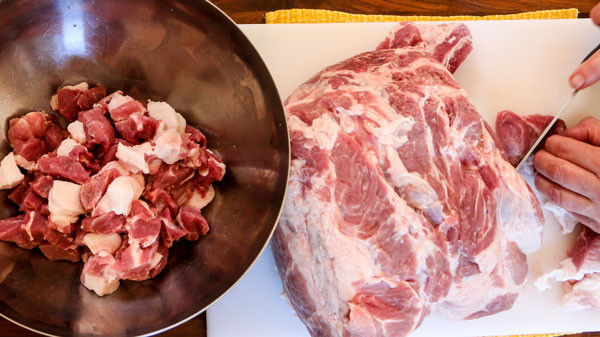
• 6 pounds pork shoulder
• 2 pounds veal shoulder
• 2 pounds pork belly
• ¼ cup kosher salt
• 1 tbsp. dextrose
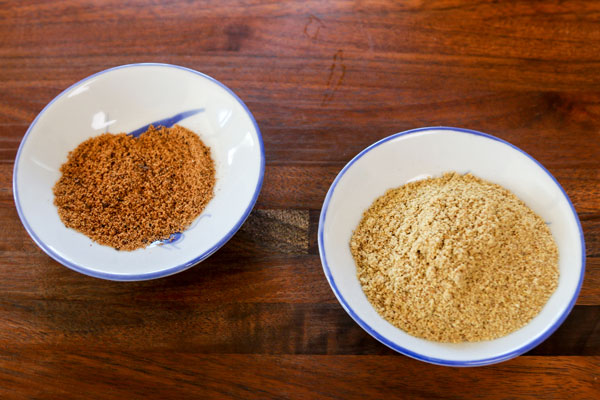
• 2 tbsp. white peppercorns
• 8 sprigs fresh marjoram or 1 tbsp. dried marjoram
• 1 nutmeg
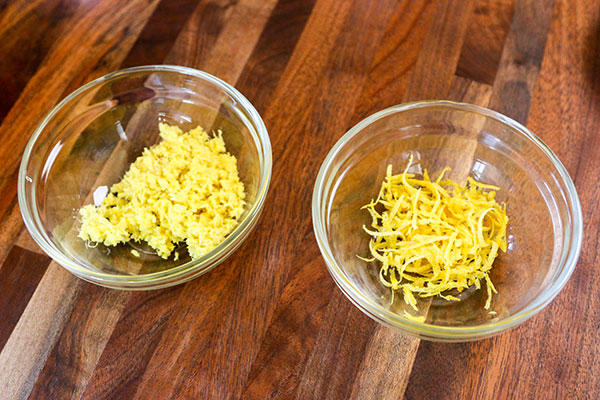
• 1 2-inch piece ginger
• 1 unwaxed lemon
• 4 eggs
• 1 pint heavy cream
For Stuffing:
• 4 cups water
• 2 tbsp. white wine vinegar
• 20 ft. hog casing
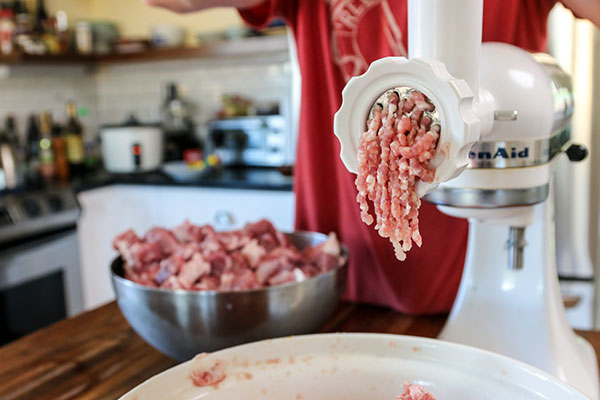
If you're buying the meat pre-ground from the butcher, ask them to finely grind the meat.
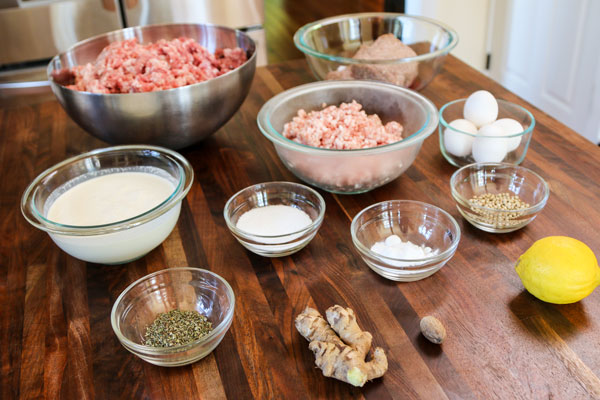
Place 3 large mixing bowls and the meat grinder attachment in the freezer around 15 minutes before use. Keeping the equipment cold will help the grinding move quickly.
Measure out all of the ingredients from your shopping list, so that they are ready to work with in the subsequent steps.
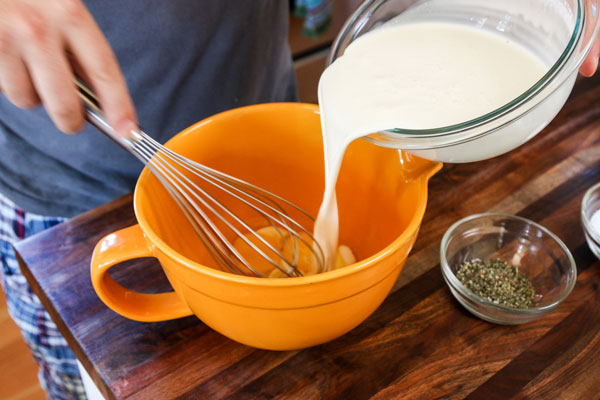
In a separate mixing bowl, whisk together 4 eggs with the heavy cream. Whisk in the spices.
Pour the liquid mixture over the ground meat. Put on food preparation gloves, then mix the liquids and spices into the meat until well incorporated, about 2 minutes.
Remove enough meat to form a small patty and set aside for the next step. Place the rest of the meat in the freezer as soon as it's ground to keep the meat cold.
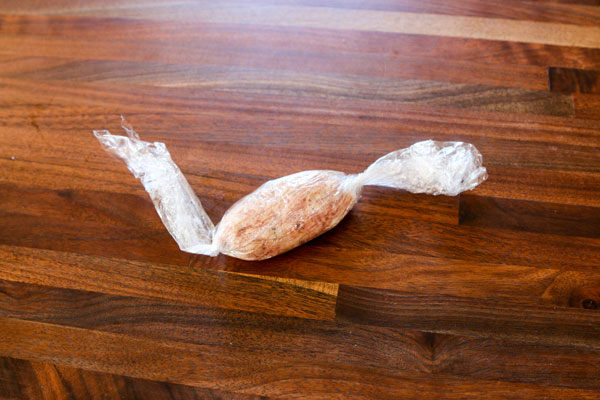
Now, let's taste it! Add water to a sauce pan; place on the stove on high heat. Bring the water on the stove top to just below a simmer, and keep at that temperature, about 180°F / 82°C.
Mold a handful of the meat mixture into a 4-inch log, and wrap the meat in plastic wrap. Place in the simmering water and poach it for about 10 minutes, until the meat reaches an internal temperature of 150°F / 65°C.
Remove the meat from the plastic wrap and taste. Add any other spice ingredients to the meat mixture to suit your taste. You'll probably serving it with a side of ground Mustard, so keep that in mind as you're tasting.
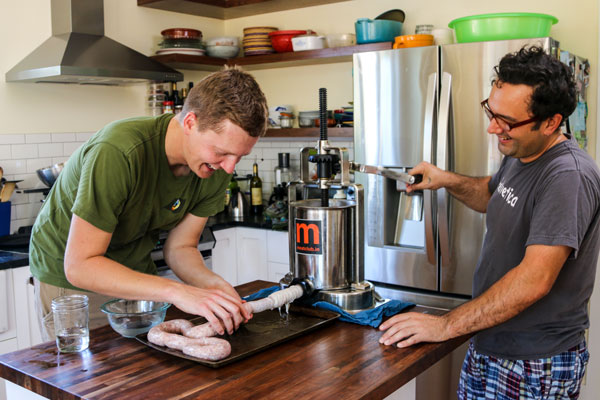
Assemble the sausage stuffer. Press the meat through the stuffer until the ground meat just barely pokes through the end of the spout.
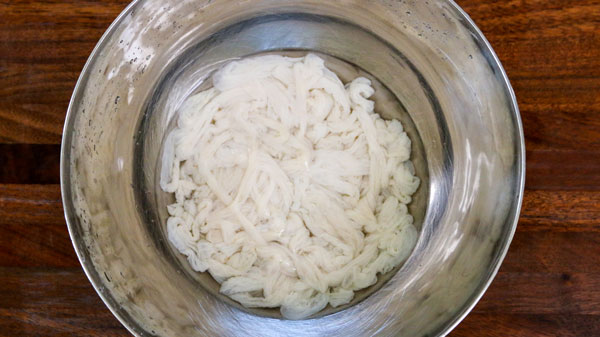
Push the open end of the hog casing over the end of the stuffer, and continue to push the casing onto the stuffer until you reach the end of the casing. Tie a knot at the end of the casing.
Stuff the sausage into the hog casings and wrap the sausage into a long coil. Once finished, tie off the other end of the sausage. Twist the sausage into links every 6 inches.
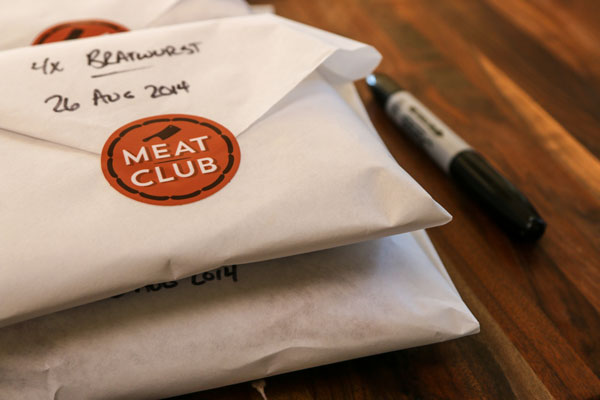
Place the cased sausages in sealable freezer storage bags. Using a Sharpie, label each package Bratwurst: made May 6, 2015.
Refrigerate for at least 24 hours before consuming, to allow the flavors to mingle. Place in the refrigerator for up to 1 week, or the freezer for up to 1 month.
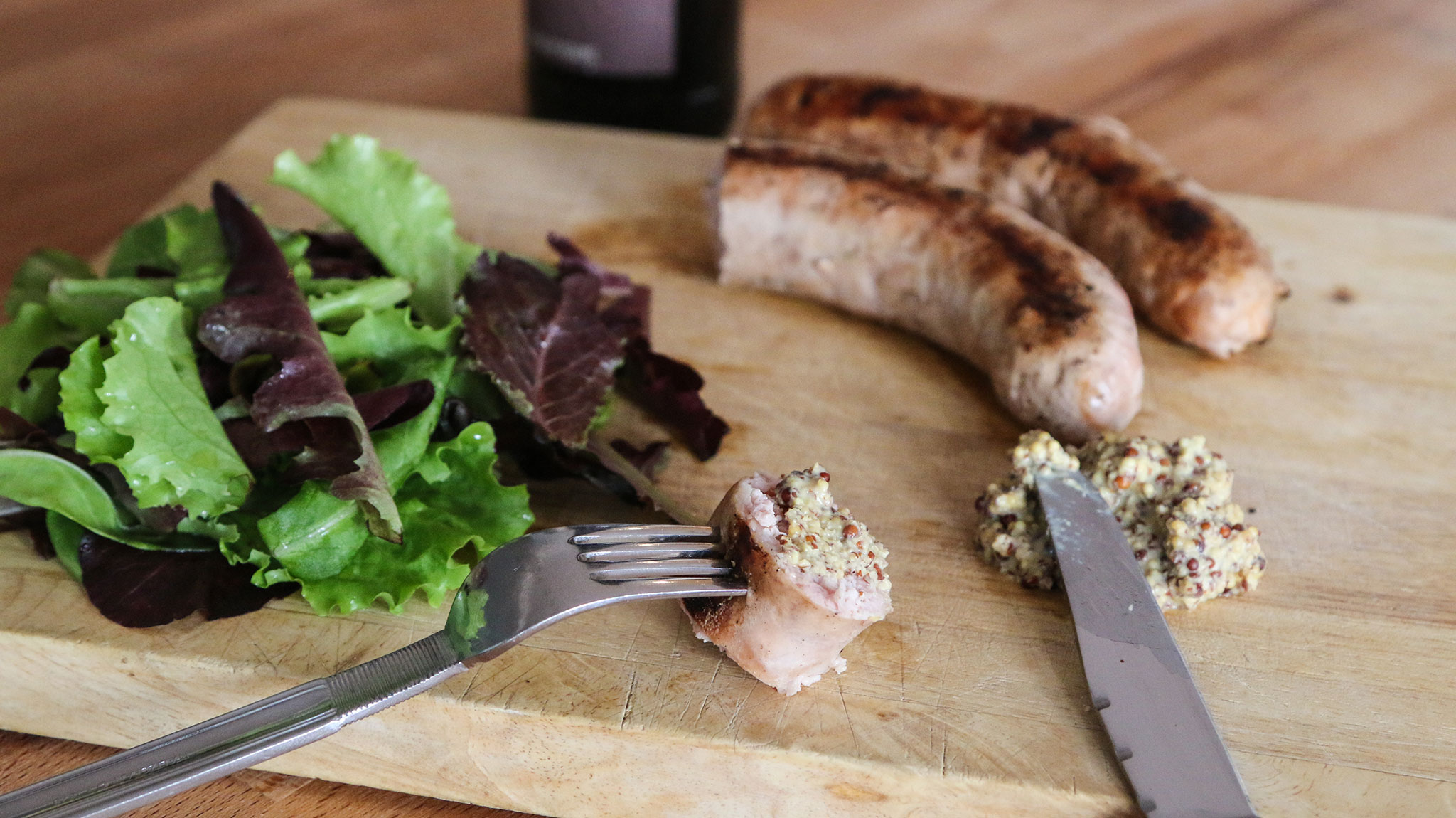
You'll need to cook the Bratwurst to an internal temperature of 150°F / 65°C before serving. Grill up them Bratwursts, or simmer them in either beer or water with vinegar and onions. Serve along side a bed of sauerkraut, or place on a Bratwurst bun, with a dollop of Mustard.
And remember, if you value your life, for God's sake don't use ballpark yellow mustard.